
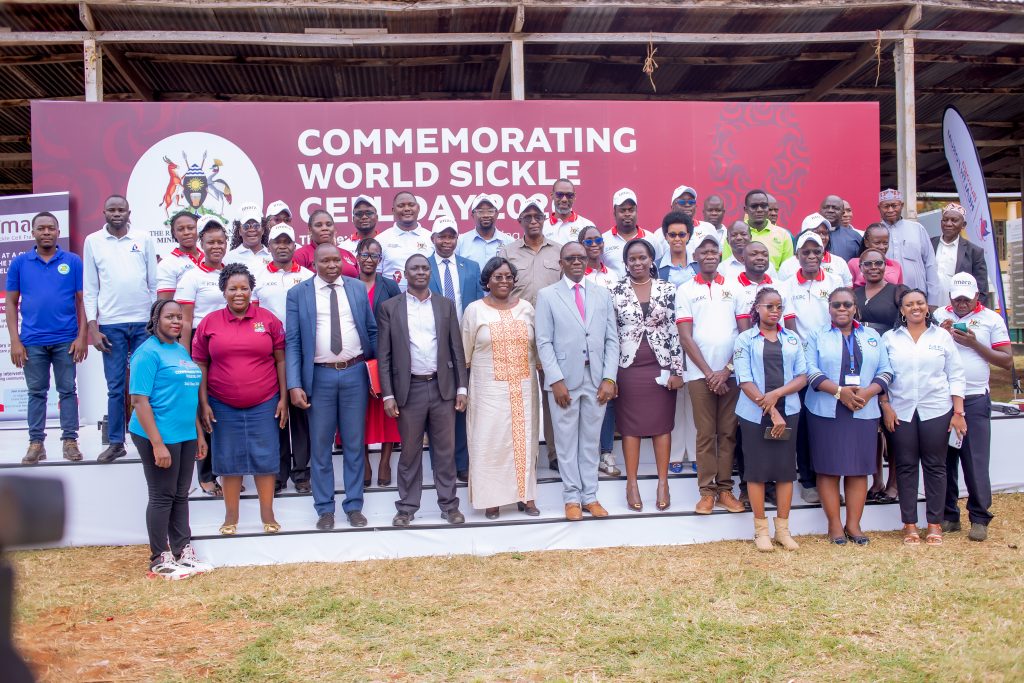
Microhaem Scientifics joined the Ministry of Health, healthcare professionals, researchers, development partners, caregivers, civil society organizations and the sickle cell community in Jinja City to commemorate World Sickle Cell Day 2026 reaffirming our commitment to expanding access to quality diagnostics and supporting Uganda’s national agenda for early diagnosis and newborn screening.
Held at Busoga Square in Jinja City under the theme, “Building and Strengthening Sickle Cell Communities in Uganda through Nationwide Newborn Screening and Knowing Your Sickle Cell Status,” the national event was a powerful gathering of voices united by a common purpose: ensuring that no Ugandan child loses their life to preventable complications of sickle cell disease.
The choice of Jinja was deliberate. According to national health surveys and sickle cell surveillance data, Busoga sub-region carries the heaviest sickle cell burden in Uganda, with the disease prevalence of around 20% and trait rates reaching 24-25% in some districts. Nationally, Uganda holds the fifth-highest sickle cell disease burden in the world and the third highest in Africa, with 13% to 15% of the population carrying the sickle cell trait.
According to the Ministry of Health, an estimated 20,000 children are born with sickle cell disease every year, while between 6,000 and 9,000 die before reaching their fifth birthday due to preventable complications, deaths that are largely preventable with early diagnosis and timely care. Mulago National Referral Hospital alone registers approximately 40 new cases every week.
These are not abstract statistics. They represent families, communities, and futures that depend on faster diagnosis, better treatment, and stronger systems.
A Call to Action from the Ministry of Health
The commemoration was graced by Dr. Daniel Kyabayinze, Director of Public Health at the Ministry of Health, who was also the guest of honor who reaffirmed Uganda’s commitment to reducing the burden of sickle cell disease and ensuring that every child born with the condition has the opportunity to live a healthy, productive, and fulfilling life. A key message from the day was the urgent need to strengthen newborn screening services, expand access to quality diagnosis and treatment, and integrate sickle cell interventions into existing health programs. Dr. Kyabayinze’s remarks reinforced what health experts have consistently affirmed: early diagnosis remains one of the most effective strategies for reducing illness and preventing deaths among children born with sickle cell disease. Addressing the disease, he noted, requires stronger collaboration across government, healthcare workers, industry, development partners and communities because no single sector can close this gap alone.
Microhaem Scientifics Supports National Efforts
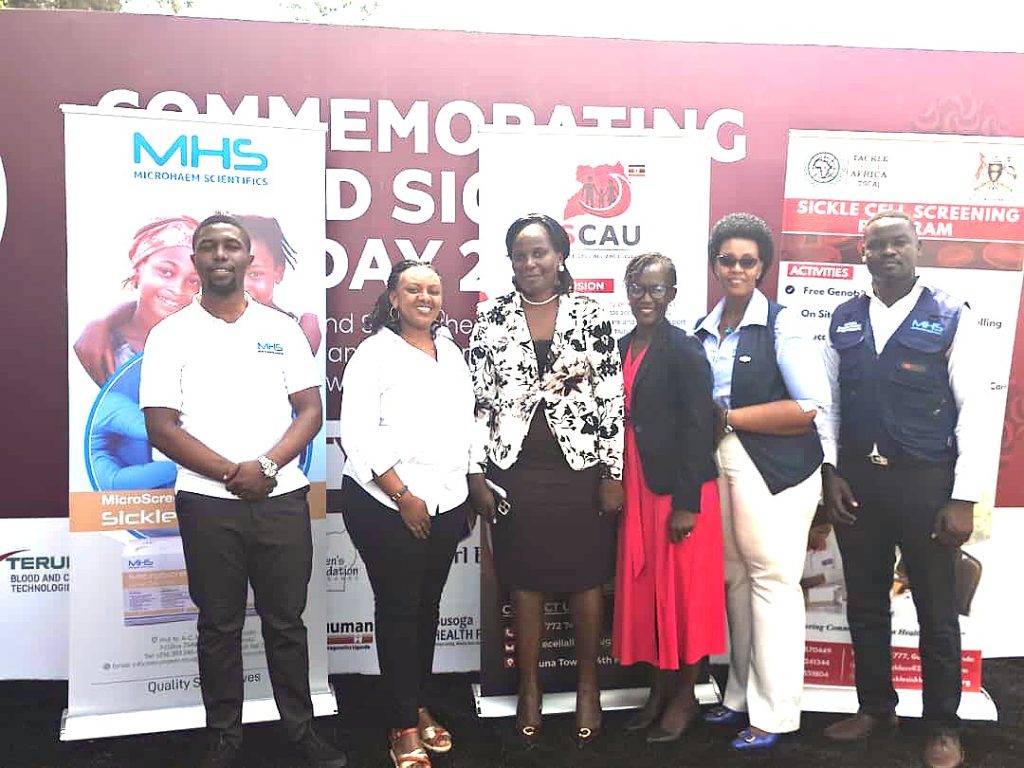
MHS contributed tangibly to the commemorations. We provided UGX 5 million in sponsorship support and donated 1,000 MicroScreen Sickle Cell HbA/HbS/HbC Rapid Diagnostic Tests to facilitate community screening and medical camp activities on the ground in Jinja. Recognizing that access to diagnostics must be matched by the capacity to use them well, MHS also supported healthcare workers and end-user training ahead of the event ensuring that the tests were administered with precision and that screening results could be trusted. Our team participated in the exhibition and technical sessions, with the opportunity to showcase our broader product range and engage directly with the public.
Partnership with Raising Hope International
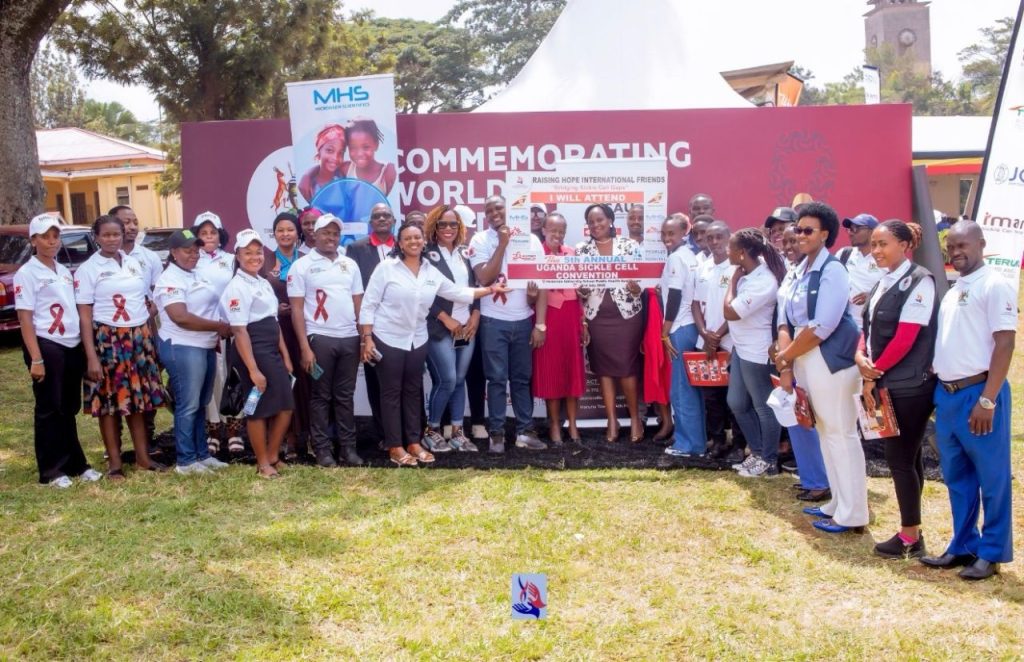
MHS’s impact on the day was amplified through our partnership with Raising Hope International, which procured an additional 3,000 MicroScreen Sickle Cell Test Kits to support ongoing community screening activities beyond commemoration. Together, we also supported training initiatives to equip healthcare workers with the skills to deliver reliable screening services in communities. This partnership reflects the kind of multi-sector collaboration that Dr. Kyabayinze called for and that we believe is essential to making meaningful, lasting progress.
The MicroScreen Kit: Locally Made, Ministry Endorsed
Microhaem Scientifics is the manufacturer of the MicroScreen Sickle Cell HbA/HbS/HbC Rapid Diagnostic Test, one of three rapid diagnostic tests officially launched this year by the Ministry of Health to support Uganda’s national sickle cell screening programme. Produced at MHS’s manufacturing facility in Ntinda, the first 4th-generation IVD manufacturing plant in Africa, the kit delivers 100% sensitivity and specificity in whole blood samples, requires no additional equipment, and is designed for use at the point of care.
The MicroScreen Kit: Locally Made, Ministry Endorsed Microhaem Scientifics is the manufacturer of the MicroScreen Sickle Cell HbA/HbS/HbC Rapid Diagnostic Test, one of three rapid diagnostic tests officially launched this year by the Ministry of Health to support Uganda’s national sickle cell screening programme. Produced at MHS’s manufacturing facility in Ntinda, the first 4th-generation IVD manufacturing plant in Africa, the kit delivers 100% sensitivity and specificity in whole blood samples, requires no additional equipment, and is designed for use at the point of care.
Having a test kit manufactured within Uganda, rather than sourced through import channels, is a significant milestone for the country’s diagnostic capacity reducing bottlenecks in supply, cutting dependence on imported technologies, and keeping quality diagnostics closer to the communities that need them most. Closing the survival gap in sickle cell disease will take more than a single commemoration. It will take sustained investment, genuine collaboration, and a long-term commitment to putting the right tools in the hands of the right people at the right time.
Microhaem Scientifics remains committed to that work through local manufacturing, partnerships, and capacity strengthening alongside the Ministry of Health and other stakeholders because every child deserves the chance to know their status early, and to live fully.

