


Uganda’s journey towards malaria elimination is being shaped by strong partnerships, local innovation, and a growing commitment to strengthening health security through home-grown solutions. At the 2026 Parliamentary Malaria Walk, Microhaem Scientifics joined national leaders, policymakers, development partners, and healthcare professionals in reaffirming that commitment while championing the role of locally manufactured diagnostics in transforming malaria care.
In recognition of its sustained contribution to strengthening malaria diagnosis and supporting Uganda’s malaria elimination agenda, Microhaem Scientifics was honored by the Uganda Parliamentary Forum on Malaria during the event. The award reflects the company’s continued investment in local innovation, strategic partnerships, and expanding access to quality diagnostics manufactured in Uganda.
Held under the national theme, “Walk the Talk: End Malaria Now,” the annual walk brought together leaders from government, Parliament, the diplomatic community, development partners, the private sector, civil society, and the public to champion collective action against one of Uganda’s leading public health challenges.
Speaking at the event, the Deputy Speaker of Parliament and Patron of the Uganda Parliamentary Forum on Malaria, Rt. Hon. Thomas Tayebwa, applauded the growing role of local manufacturing in strengthening Uganda’s health system and reducing dependence on imported medical products.
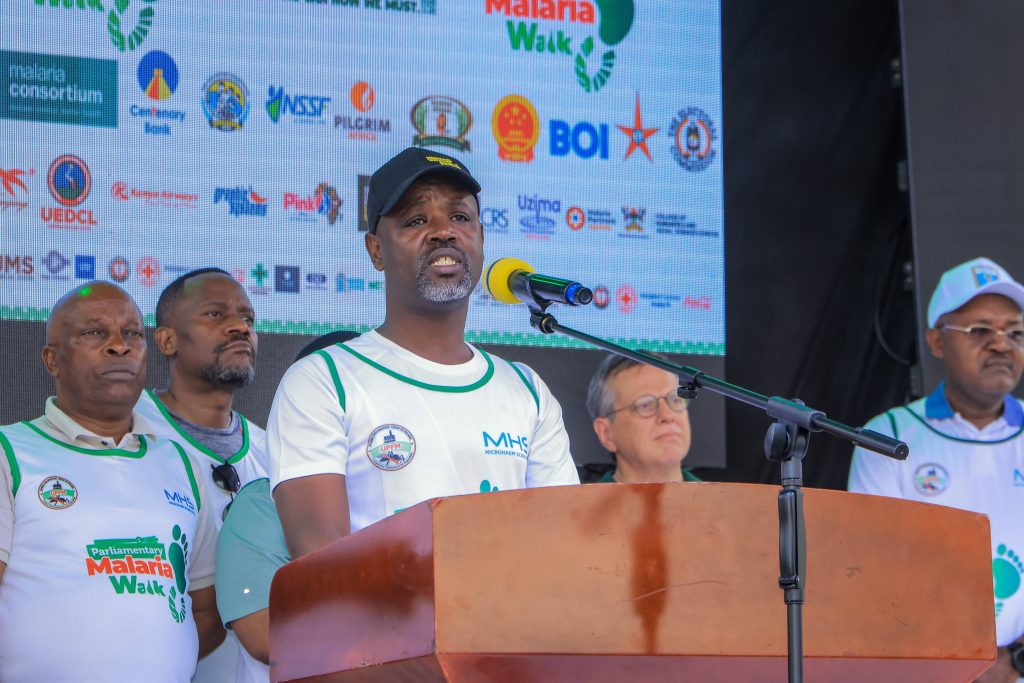
“Why should we be importing malaria kits from countries which have never seen malaria? I’m really, really happy to see that a Ugandan is the one producing the kits that we are now using,” he remarked, commending Microhaem Scientifics for manufacturing malaria rapid diagnostic test kits in Uganda.
The Deputy Speaker noted that strengthening local manufacturing is essential to improving access to timely diagnosis while supporting Uganda’s broader ambition of achieving malaria elimination by 2030.
Malaria remains one of Uganda’s most pressing public health challenges. According to the World Health Organization’s 2025 World Malaria Day update, the country recorded more than 16 million malaria cases and 2,793 malaria-related deaths in 2023, with children under five disproportionately affected. With an estimated incidence of 267 cases per 1,000 people at risk, Uganda remains among the world’s highest malaria-burden countries.
Representing Microhaem Scientifics, Board Chairman Prof. Bruce Kirenga reaffirmed the company’s commitment to advancing locally manufactured diagnostics as a cornerstone of Uganda’s malaria response. He highlighted the company’s innovative malaria rapid diagnostic tests, designed to detect both conventional malaria infections and HRP2 gene deletion variants through an additional pLDH target—an advancement that improves diagnostic accuracy by identifying infections that conventional tests may miss. He also revealed that MHS scientists are developing the next generation of diagnostics by integrating additional testing capabilities for other neglected tropical diseases.
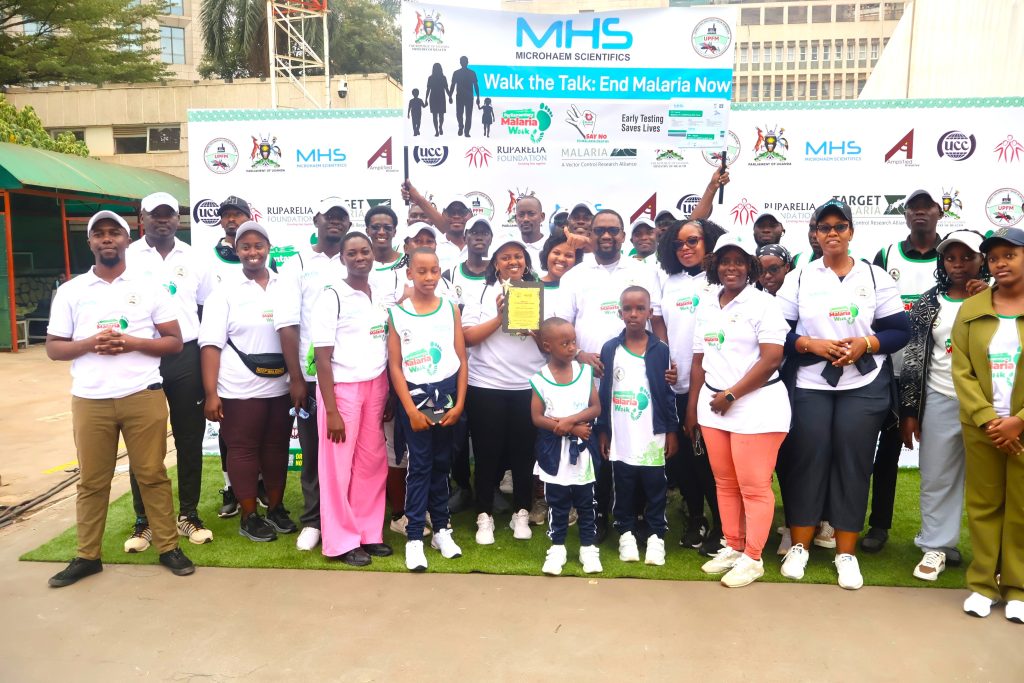
Prof. Kirenga emphasized that achieving malaria elimination will require sustained collaboration between government, industry, researchers, healthcare providers, and development partners, reaffirming Microhaem Scientifics’ commitment to delivering quality diagnostics manufactured in Africa for African health systems.
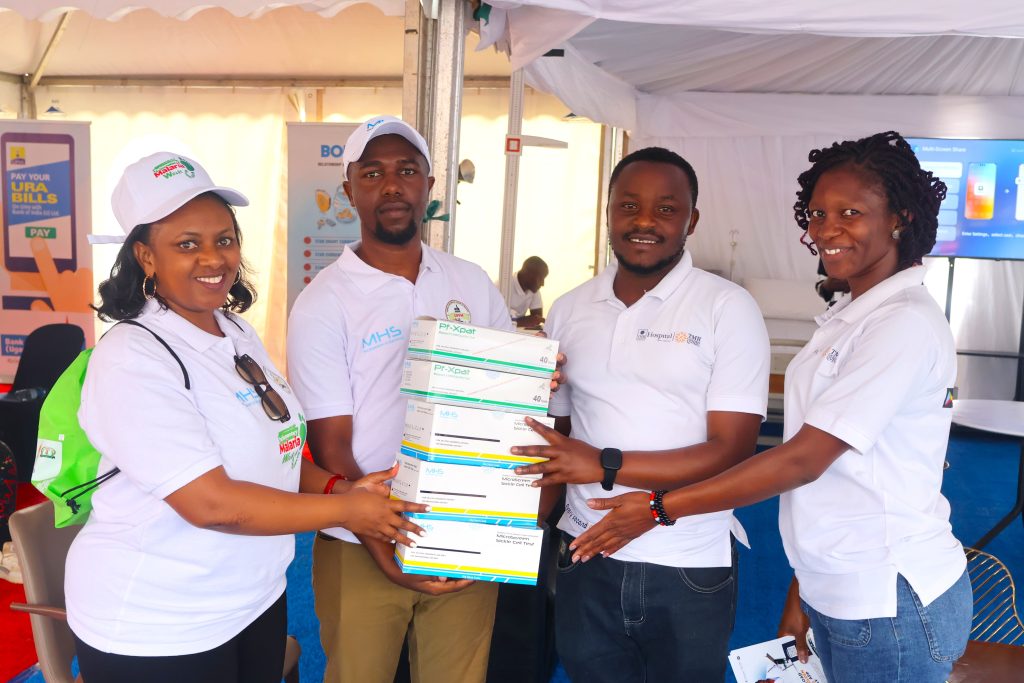
Beyond the walk, Microhaem Scientifics reinforced its commitment to community health by donating locally manufactured malaria, HIV, and sickle cell diagnostic kits to the Uganda Parliamentary Forum on Malaria in support of the Parliamentary Health Camp. The donation enabled healthcare teams from Case Hospital, Case Medical Services, and Marie Stopes Uganda to provide free screening and testing services, extending access to early diagnosis while translating advocacy into meaningful public health action.
As Uganda continues its transition from malaria control to malaria elimination, partnerships between government, Parliament, healthcare providers, development partners, and local manufacturers remain critical to strengthening resilient health systems. Through continued investment in research, innovation, and local manufacturing, Microhaem Scientifics remains committed to ensuring that quality diagnostics developed and manufactured in Uganda contribute to healthier communities and a more self-reliant Africa.

