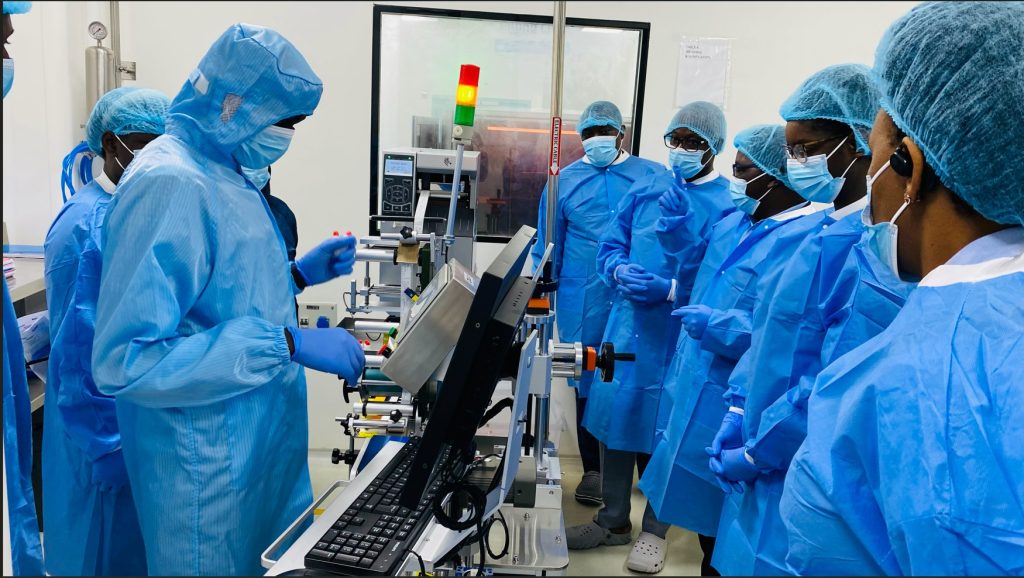

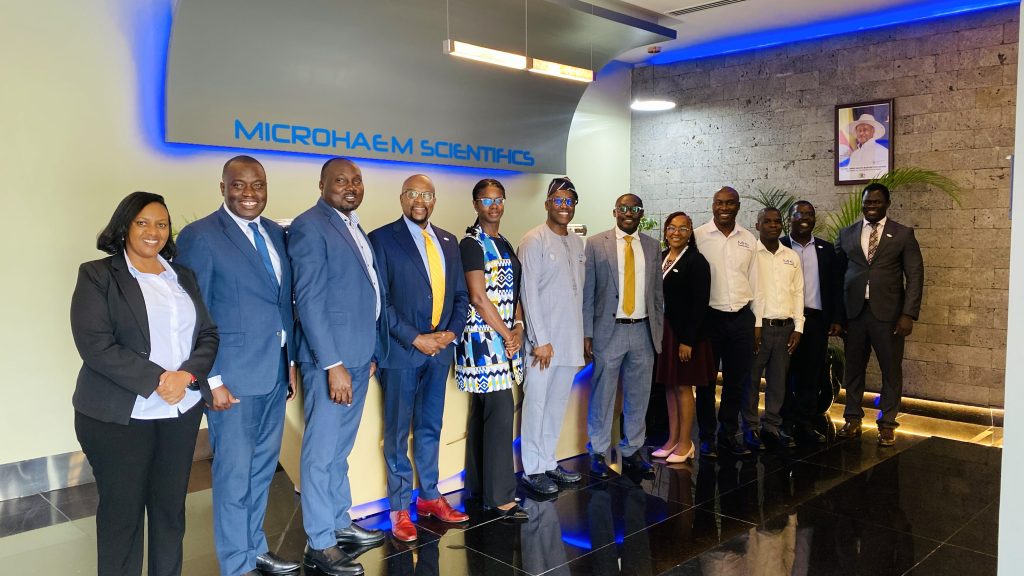
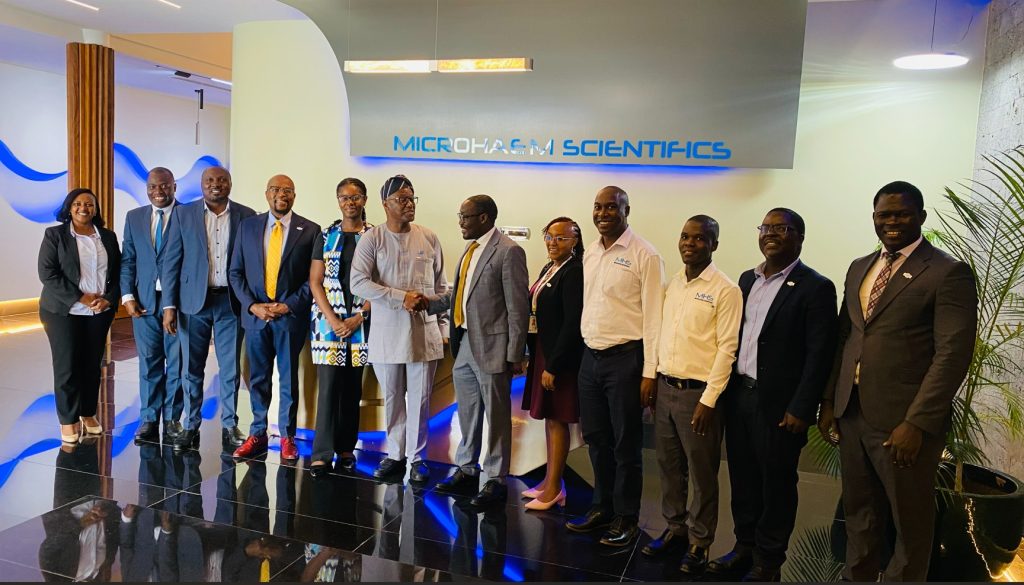
Microhaem Scientifics was honored to host a high-level delegation at its plant in Ntinda, led by Dr. Michael Adekunle Charles, the CEO of RBM Partnership to End Malaria, together with Clarisse Morris from the Global Fund and Robert Mugerwa, Private Sector Coordinator at the Ministry of Health, Uganda. The visit demonstrated the strategic role that regional diagnostic manufacturing can play in ensuring reliable access to medical supplies like RDTs while advancing Africa’s broader goals of health security, industrial development, and economic resilience. The team also highlighted the importance of strong partnerships and collaborations between global health partners, government, and the local industry in driving innovation to ensure sustainable and equitable access to malaria diagnostics and treatment in the fight to end malaria.
Uganda continues to face a high malaria burden, with over 90 % of the population at risk and malaria responsible for up to 30‑50 % of outpatient visits and 15‑20 % of hospital admissions in some regions. Recent World Health Organization estimates place Uganda among the top countries with the highest malaria caseloads globally.
During the visit, the leaders engaged with the MHS Senior Management team, headed by the Managing Director, Dr. Cedric Akwesigye, who provided a detailed overview of the company’s manufacturing processes, innovation journey, and vision for the future of diagnostic manufacturing in Africa. The group also toured MHS’s state‑of‑the‑art in vitro diagnostics facility, showcasing Uganda’s growing capability to locally produce high‑quality malaria rapid diagnostic tests (RDTs) and other essential kits. This local capacity supports stronger supply chains, reduces reliance on imports, and improves responsiveness to public health needs
Uganda has seen notable progress in malaria control over the past decades, including a significant reduction in incidence and mortality. However, the disease remains a major public health challenge, making robust diagnostics, strong partnerships, and sustained local capacity critical to ending malaria.
The discussions also explored how strengthened partnerships, streamlined regulatory pathways, and continued investments in local manufacturing can accelerate the adoption of emerging malaria tools and enhance access for vulnerable communities, particularly children and pregnant women.
Microhaem Scientifics reaffirmed its commitment to supporting national and global malaria elimination efforts through continuous investment in local manufacturing, strict adherence to international quality standards, and collaboration with partners to ensure that life‑saving innovations reach communities quickly and affordably. By bringing together global leadership and local expertise, the engagement reinforced a shared vision that strong partnerships, supported by robust local production, are essential to ending malaria faster and building a healthier future for Africa.